
Environment
Transition plan for climate change mitigation E1-1
Climate issues are one of the key focus areas for Norðurál in its strategy and future value creation. The company produces aluminum with one of the lowest carbon footprints in the world, based on the use of 100% renewable electricity, stable production processes, and targeted management of greenhouse gas emissions.
- Norðurál’s carbon footprint is about a quarter of the global average regarding Scope 1, 2 and 3 in the value chain.
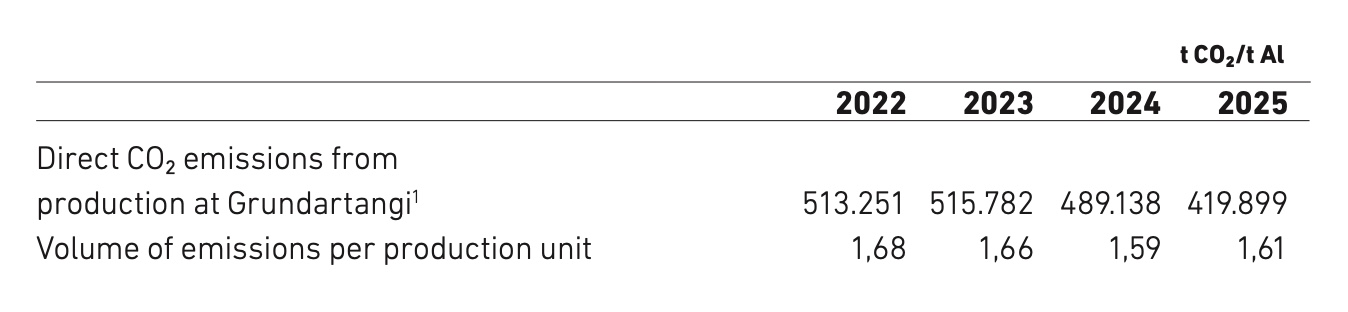
- Direct emissions in Scope 1 are below two tons of CO₂ equivalents per ton of production.
- The company has significantly reduced emissions of PFCs and other taxonomy-eligible carbons and the European Pollutant Release and Transfer Register (E-PRTR).
- Norðurál has achieved a 57% reduction in emissions outside the ETS compared to 2015. The initial goal was a 40% reduction, but when the former goal was achieved in 2024, the strategy was reset at a 55% reduction. Reduction in emissions per unit of production is 48%.
- The company’s aluminum production is targeted to be carbon neutral by 2040.
Climate issues
Emissions from Norðurál’s aluminum production are among the lowest known in the world. This success is achieved through quality work practices and effective operational monitoring. Emissions outside production are continuously reduced and work is conducted according to a detailed action plan and clear targets and indicators.
In accordance with the company’s policy, Norðurál is constantly working to minimize environmental impact, thereby minimizing greenhouse gas emissions. Norðurál’s performance and targets in relation to reducing greenhouse gas emissions are regularly reviewed, for instance at Sustainability Steering Committee meetings and monthly environmental meetings.
The greenhouse gas emission from Norðurál’s operations can be classified into two main categories. On the one hand, there are environmental impacts associated with the aluminum production process itself, emissions that fall under the European Union’s Emissions Trading System (ETS). On the other hand, there are emissions related to other aspects of the company’s operations, such as fuel consumption, transportation, waste management, and other operational aspects outside the production process. Norðurál therefore manages greenhouse gas emissions through two separate but interconnected systems that reflect these two emission categories.
Norðurál has set ambitious goals when it comes to aluminum production per se. The goal is to achieve carbon neutrality by 2040, but for that to happen, innovation and technological development are needed, as carbon emissions are an integral part of the industrial production of aluminum as it is practiced today. An important part of minimizing the company’s carbon footprint is analyzing the aluminum’s life cycle from the acquisition of raw materials to the finished product. Engineering firm Efla has conducted such a life cycle assessment of the aluminum produced by Norðurál. Such an analysis was first conducted in 2019, but now the analysis was updated with direct data from the operations of Norðurál’s largest suppliers. The analysis is based on the aluminum’s cradle-to-gate life cycle, including the production and transportation of raw materials, local emissions, and generation of waste. The environmental impact of all links in the production chain is assessed and documented. This provides a clear picture of where and how we can implement procurement and design production processes to minimize the environmental impact.
Impacts, risks and opportunities ESRS 2 IRO-1
Norðurál uses an integrated process to assess and respond to climate risks, in accordance with ESRS and TCFD guidelines:
- Analysis of direct and indirect emissions (Scope 1, 2 and 3) is performed regularly, based on metrics from the company’s management systems that are ISO and ASI certified.
- TCFD models and environmental factor analysis are used to analyze the impact of climate change on operations, energy security and the value chain.
- Risks assessed: impact on the supply chain, energy price volatility, emission quotas and rising carbon taxes.
- Opportunities utilized: Increased demand for low-carbon aluminum, green financing, circular innovation and supply chain traceability.
Management and responsibility
- Climate affairs are managed by the Director of Safety, Environment and Improvement and they are discussed regularly in the Sustainability Steering Group and Lead Team meetings.
- Risks are assessed as part of Norðurál’s integrated risk management (GOV-5) and ESRS disclosure requirements are part of the company’s governance system.
Policies related to climate change mitigation and adaptation E1-2
Norðurál’s aluminum products have one of the lowest carbon footprints in the world. Considering the entire process, from the processing of raw materials to the delivery of the finished product to customers, the carbon footprint of Norðurál aluminum only amounts to a quarter of the world average. Norðurál aspires to be the first smelter in the world to produce carbon-neutral aluminum.
The largest source of greenhouse gases from smelters is the CO₂ emitted when carbon anodes are burned during the electrolysis of aluminum. Despite best available technology, there is no other way to produce aluminum. That is why these two options are usually considered to reduce GHG emissions from smelters:
- Developing a new type of anode where carbon does not bond with oxygen. This would result in negligible CO₂ emissions.
- Capturing CO₂ in emissions from potrooms and tall stacks. The biggest challenge regarding this option is that the concentration of CO₂ per volume in emissions is low, or approximately the same as in the atmosphere. This makes the use of available technological solutions a challenging task.
The company’s short- and long-term strategy focuses on minimizing greenhouse gas emissions. Investment project processes take this into account, which contributes to energy transition and a reduction in the use of oil and gas in machinery, vehicles, and production equipment.
Actions and solutions for climate issues E1-3
Norðurál has set clear and measurable goals for reducing greenhouse gas emissions and aims to be carbon neutral by 2040. To achieve these goals, the company has formulated a climate action plan. Click here to see a summary of actions related to emissions from Norðurál’s operations that fall within the scope of the Paris Agreement. The plan is updated regularly with the latest project progress and measurements.
Norðurál’s actions to reduce greenhouse gas emissions cover both direct and indirect emissions (Scopes 1, 2 and 3) and are based on the following main focuses:
- Improved energy efficiency in production processes through technological upgrades and precise control of energy consumption.
- Collaboration with suppliers to reduce the carbon footprint of resources, especially anodes and bauxite.
- Introduction of carbon pricing in operational decisions and long-term investment analyses.
- Circular solutions and redesign to better utilize raw materials and minimize waste.
- Carbon capture and research into new technologies in collaboration with the scientific community and innovation projects.
- Analysis of Scope 3 emissions and collaboration with customers and parties in the value chain to reduce indirect emissions.
Targets related to climate change mitigation and adaptation E1-4
Norðurál aims to become a carbon-neutral company by 2040. This goal applies to all of the company’s operations and covers direct and indirect emissions under Scopes 1, 2, and 3. Progress in climate issues is assessed annually and reviewed by Norðurál’s board and executive management. Annual progress reports are published on the company’s website and in a sustainability report in accordance with ESRS standards.
To achieve this goal, Norðurál has set measurable secondary objectives and an action plan with an emphasis on the following aspects:
- Maintain direct emissions (Scope 1) below 2 tons of CO₂ per ton of aluminum produced and continue to reduce them in line with technological advances and improvements in production.
- In the production process, to maintain the use of 100% renewable electricity (Scope 2) from hydropower and geothermal resources.
- Reduce emissions covered by the Paris Agreement by at least 55% by 2030 compared to base year 2015.
- Implement carbon capture solutions and enhance participation in innovation projects and scientific collaboration.
Energy consumption and mix E1-5
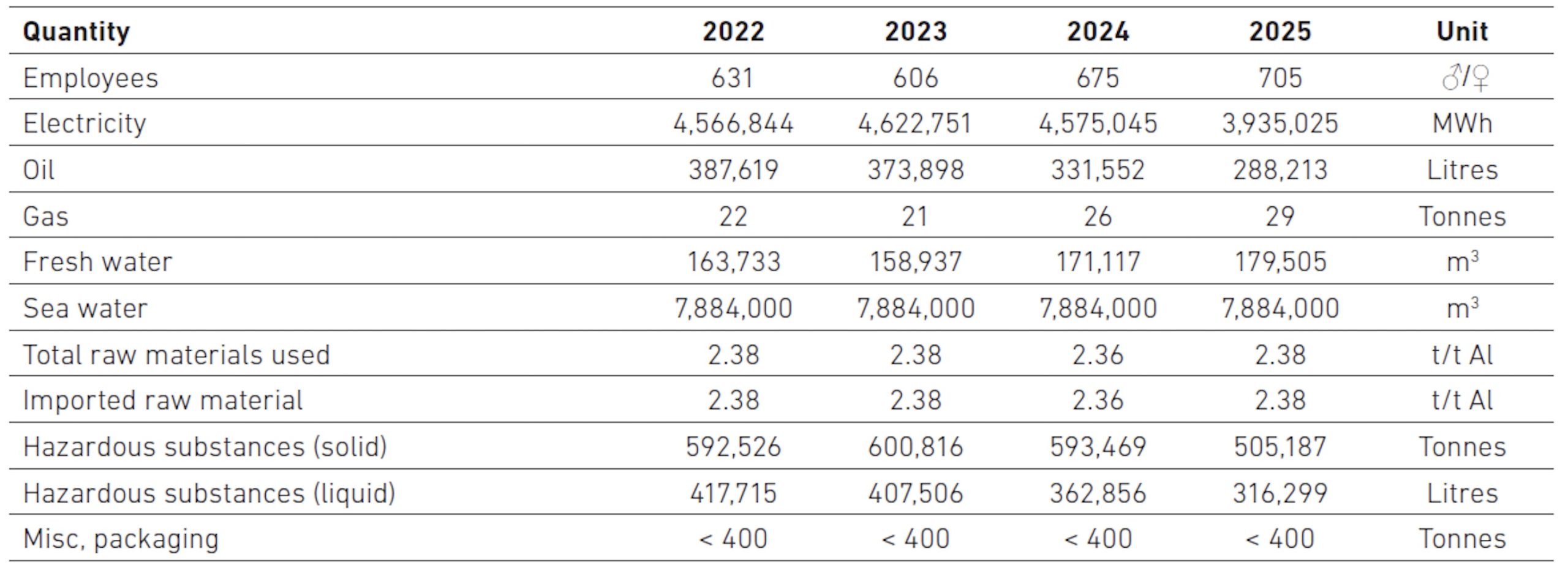
All electricity in Iceland is generated from renewable and sustainable resources. Most of this electricity is used to produce aluminum from aluminum oxide, with Iceland accounting for about 2% of the global aluminum output. In 2025, Norðurál used 3,935 GWh of clean renewable energy for production, about one quarter of the electricity generated in Iceland during the year. Electrical power use per each ton of aluminum produced was 13.9 Mwh/t Al. Aluminum produced by Norðurál has one of the lowest carbon footprint available in the world.
Gross Scopes 1, 2, 3 and Total GHG emissions E1-6
Aluminium produced by Norðurál has the lowest carbon footprint available in the global market. The total carbon footprint – from the processing of raw materials to the delivery of the finished product – is only a quarter of the global average and about half of the European average.
The environmental impact of greenhouse gases from Norðurál’s operations can be classified into two main categories:
- Emissions from production (falls under ETS): Direct emissions from aluminum production in potrooms fall under EU’s Emissions Trading Scheme (ETS).
- General operational emissions: Emissions that arise from other operations, such as machinery, waste and transport. These emissions are outside the ETS and they are part of the company’s sociological impact.
Norðurál therefore maintains double carbon accounting – one covering the potrooms and the other covering general operations. Performance and actions are measured separately for each category.
Trends between years
Emissions outside the production process
As for emissions outside the production process, the oil consumption of machinery and equipment is the largest emission factor. The biggest reduction opportunities therefore pertain to energy conversion of machinery and mobile equipment.
During the period 2015 to 2025, total emissions have decreased in all categories, except for air travel, which temporarily increased following the implementation of a new production line as well as travel by Norðurál specialists for maintenance projects.
Other main emission factors are:
- Machinery and equipment: 72%
- Refrigerants: 15%
- Employee car use (carpooling): 5%
- Mixed waste: 5%
- International air travel: 3%
Performance in reducing emissions
The reduction in emissions from machinery and equipment was around 51% or about 756 tons of CO₂-equivalents, through energy exchange and reduced fuel consumption.
The reduction in emissions from employee carpooling was around 76% with the implementation of electric cars.
Emissions from waste management decreased by 61% after landfilling of mixed waste was stopped and instead it was transported for energy recovery abroad (incineration with heat recovery in central heating and hot water production).
GHG removals and GHG mitigation projects financed through carbon credits E1-7
Norðurál has purchased 1,100 certified Icelandic carbon credits from Yggdrasil Carbon (YGG) as part of their first certified Icelandic carbon sequestration project. The credits derive from YGG’s project at Arnaldsstaður in Fljótsdalur, East Iceland, where spruce, pine, and poplar were planted as part of the project in the summer of 2022. The carbon credits will not be active until measurements show real sequestration in the forest. It is assumed that Norðurál’s credits will be gradually actualized until the year 2072. One certified carbon credit is created when one ton of carbon dioxide, which has been measured using approved methods and certified as such, is removed from the atmosphere or is prevented from entering the atmosphere.
Internal carbon pricing E1-8
Greenhouse gas emissions linked to the production process of Norðurál fall under the scope of EU’s emission trading system (ETS). Its aim is to reduce emissions from the production processes of major industrial concerns in Europe, where companies must purchase emissions allowances. The trading system therefore functions as an economic incentive for industrial concerns like Norðurál to reduce emissions.
Anticipated financial effects E1-9
Climate change can reduce access to raw materials or reduce the quality of raw materials. Climate change can cause disruption to the supply chain of raw materials. Extreme weather conditions (severe frost/extreme heat/storms/floods/rise in sea levels) can cause damage to property, which can reduce the quality of production and production capacity. Droughts affect the water level in the highlands and thus the availability of renewable electricity. All these factors can have a significant financial impact on Norðurál’s operations.
Policies related to pollution E2-1
Norðurál’s environmental policy reflects the company’s ambition to minimize the environmental impact of its operations by reducing emissions and pollution to air, water, sea, and soil. The company works systematically to prevent pollution, improve environmental performance, and ensure that operations follow laws, operating permits, and other environmental requirements. Environmental impact is part of the risk assessment in connection with investment projects and Norðurál’s operating procedures consider the minimization of environmental impacts. Clear operating procedures, their follow-up, and the monitoring of emissions ensure that Norðurál’s operations are in harmony with the environment and society. The company’s environmental risk analysis addresses risk factors related to all types of emissions and how such emissions are managed and minimized. Responses to acute pollution are defined in the company’s emergency response and evacuation plan.
Norðurál’s operating permit is issued by the Icelandic Environment and Energy Agency and is accompanied by detailed requirements for internal and external monitoring of the environment. While internal monitoring is defined in a measurement plan that accompanies the operating license, external monitoring is described in a separate monitoring plan approved by the Icelandic Environment and Energy Agency.
Description of the processes to identify and assess material pollution-related impacts, risks and opportunities ESRS 2 IRO-1
Norðurál has implemented integrated, certified processes for identifying and assessing environmental impacts, risks and opportunities related to emissions and other sustainability aspects. The processes are part of the ISO 14001 certified environmental management system and integrated with the company’s overall management.
Environmental factor analysis
- Norðurál conducts a systematic environmental aspect analysis where all aspects of the operation are assessed based on the scope, severity and likelihood of negative impacts.
- The environmental aspects that are considered risky or involve significant challenges are defined as significant environmental aspects and are subject to annual review and prioritization of actions.
- Other aspects are reassessed at least every three years.
- The analysis is conducted with the active participation of managers and employees from all key departments.
Consultation and participation of employees
- The process is based on consultation and multidisciplinary assessment within the company and includes the involvement of experts, managers and employees in operations and production.
- This ensures that insight into daily operations is utilized for risk assessment and the identification of improvement opportunities.
Feedback system and notification of environmental incidents
- Norðurál operates a feedback system where employees can record deviations, incidents or improvement opportunities related to pollution or other environmental risks.
- The feedback is analyzed and the appropriate improvement process is subsequently initiated.
- Field inspections, environmental reviews and regular monitoring of emissions and environmental aspects are part of the daily work of experts and managers.
Objectives and improvements
- Results from environmental factor analysis and recommendations are used to formulate measurable goals, improvement projects, and manage the prioritization of actions.
- In this way, Norðurál ensures that environmental policy and emissions management have an actual impact on the company’s daily decisions and long-term strategy.
Actions and resources related to pollution at Grundartangi E2-2
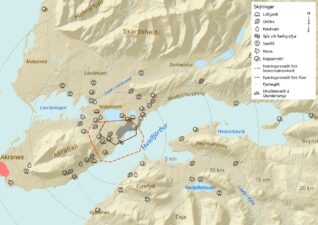
Norðurál actively participates in environmental monitoring of the industrial area at Grundartangi, which has been conducted continuously for over a quarter of a century. With regular and long-term data collection, the area is one of the most studied in Iceland when it comes to assessing the environmental impact of industrial activities.
Environmental monitoring is an important part of Norðurál’s environmental management and supports the company’s goals of transparency, responsible practices and good coexistence with the local community and environment. The results of the monitoring provide valuable information on the development of environmental factors in the area and create a solid basis for decision-making, improvement, and continued minimization of environmental impacts.
Independent experts monitor air quality, marine and freshwater environments, as well as impacts on vegetation and livestock, in accordance with an approved monitoring plan based on permit requirements and approved by the Icelandic Environment and Energy Agency. This monitoring tracks the long-term impacts of the operations and ensures that the development of environmental factors is assessed on a scientific and professional basis.
The scope of environmental monitoring in 2025 covered about 120 sampling points, where around 420 samples were collected and analyzed, and about seventy-five parameters identified. Studies for environmental monitoring were conducted by the Marine Research Institute’s Chemical Analysis Department, Iceland Food and Biotech R&D (Matís), the Mosfellsbær Veterinary Clinic, and other independent parties.
Results for air quality, freshwater, grass, and sea reveal that all reference limits set in regulations and operating permits were met. Icelandic reference values for precipitation, vegetation (leaves and needles) and herbivores are not defined. Fluoride concentrations in vegetation were in all cases below the tolerance limits for vegetation. The average concentration of fluoride in the jawbones of lambs has increased compared to 1997 but decreased compared to 2007, and in adult sheep the average concentration of fluoride has increased compared to 1997 but remained unchanged compared to 2007. There does not appear to be a clear relationship between the dental health of livestock and the concentration of fluoride in the jawbone. There were no detectable effects of fluoride on the teeth or joints of live sheep and horses.
The companies involved in the environmental monitoring in Grundartangi are Norðurál at Grundartangi, Elkem Ísland, and Alur aluminum processor. Part of the measurements are accessible in real time on the Icelandic Environment Agency’s website. An abstract with the results for the year 2025 can be found here along with the 2025 report.
Internal monitoring
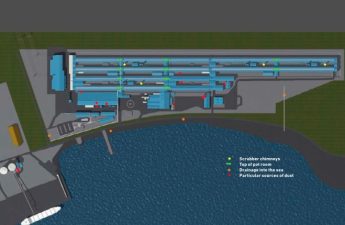
Internal monitoring of Norðurál’s environmental issues is conducted according to the operating license measurement plan. Fluoride, dust, and sulfur dioxide emissions from the potrooms and scrubbers are monitored through continuous measurements and annual comparison measurements by external parties. Emissions from smaller dust sources are also monitored regularly.
Continuous measurements of scrubber stacks and potroom framework are automatically recorded and monitored. Managers and employees on shifts thus receive a message immediately if emissions turn out to be above defined internal standards. This makes it possible to shorten response times and minimize emissions.
On the Norðurál site, there are oil separators and sand traps where applicable that clean surface water which flows to the sea. The total flow of surface water and wastewater to the sea is not measured, but quarterly measurements are made of the concentration of substances in outlets from Norðurál’s site. An analysis of oils in cooling water from rectifiers and the casthouse is conducted twice per year. Verkís Engineering monitors the sewerage for fluoride, aluminum, suspended particulates, and oil or grease. Chemical analyses of cooling water are conducted by the University of Iceland’s Pharmacology and Toxicology Research Institute.
Targets related to pollution E2-3
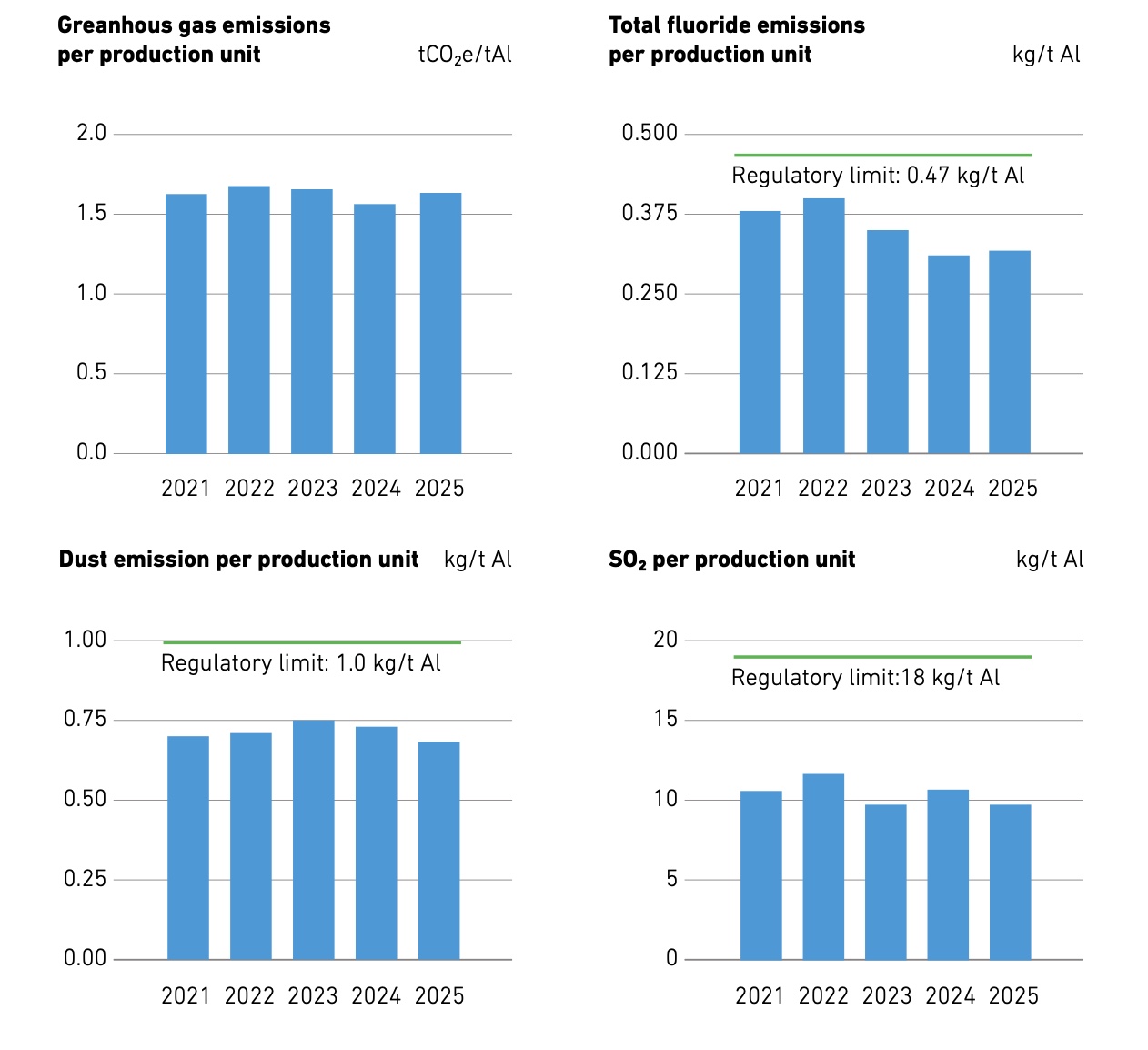
Norðurál has set clear goals to minimize the release of pollutants in accordance with the company’s environmental policy and statutory requirements. The two most important environmental factors, fluoride and dust emissions, are continuously monitored and followed up with daily, weekly, monthly, and annual measurements.
Fluoride
Fluoride emissions are measured both at the potrooms and in the scrubbers.
Fluoride emission targets are defined both as operating permit limits and as internal targets.
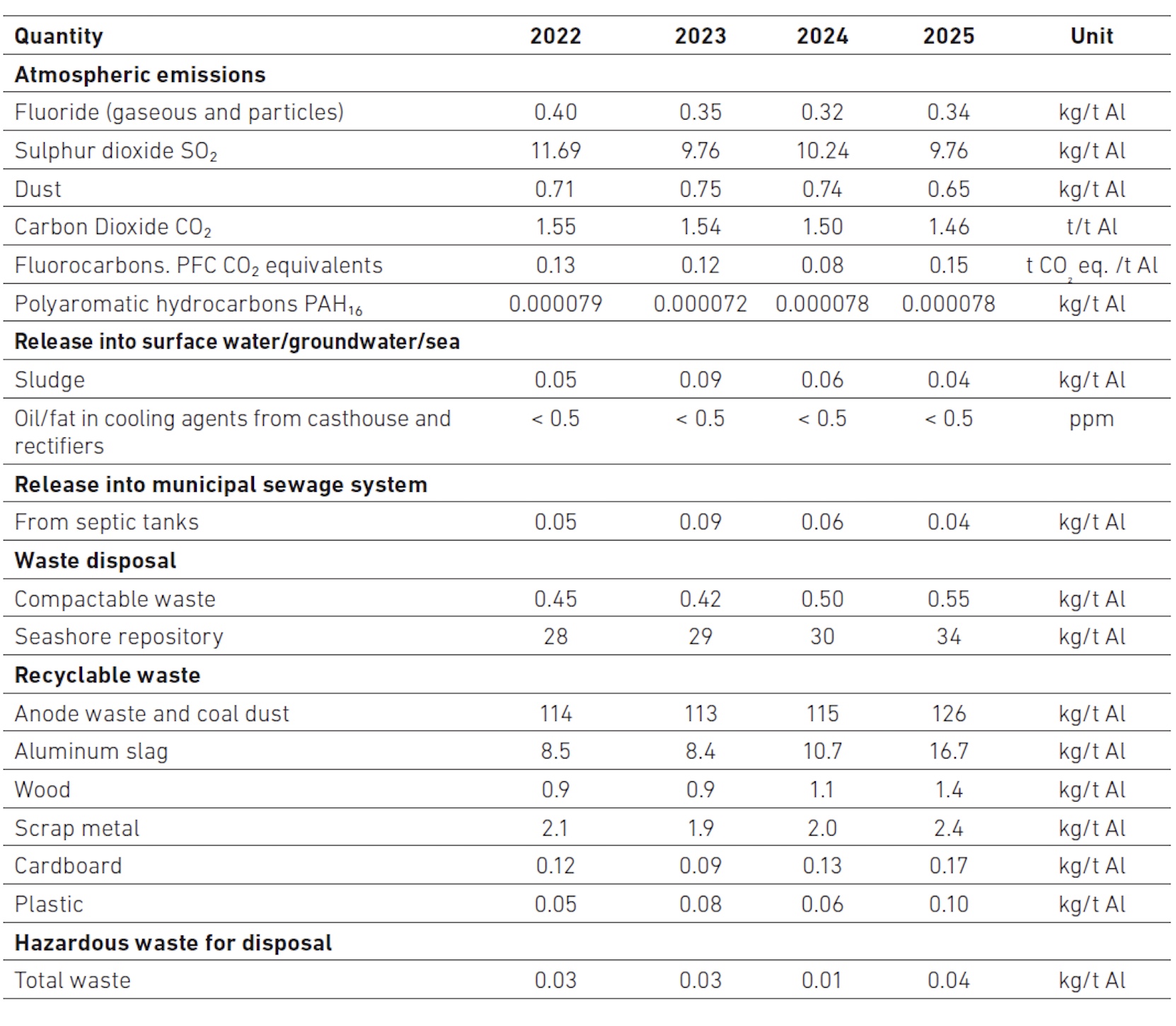
In 2025, the fluoride emission target of 0.34 kg/t Al was achieved, compared to a target of 0.35 kg/t Al.
Dust
Dust contamination is analyzed through air quality measurements in the potrooms and from the scrubbers. In 2025, the dust emission target of 0.65 kg/t Al was achieved, compared to a target of 0.70 kg/t Al. This is mainly due to the increased cleaning capacity of scrubbing equipment combined with regular maintenance.
Continuous monitoring and improvement
Emission targets vary by regions and circumstances, but they are all part of an approved process according to the ISO 14001 environmental management system.
Results are compiled regularly and presented to managers and employees, with the aim of identifying deviations and implementing improvements.
Pollution of air, water and soil E2-4
Results from internal monitoring of emissions to air, water and soil can be found in the table on Norðurál’s Green Accounting and in the environmental monitoring report for the industrial site at Grundartangi. See more in the section on Norðurál’s Resource inflows, E5-4 below.
Substances of concern and substances of very high concern E2-5
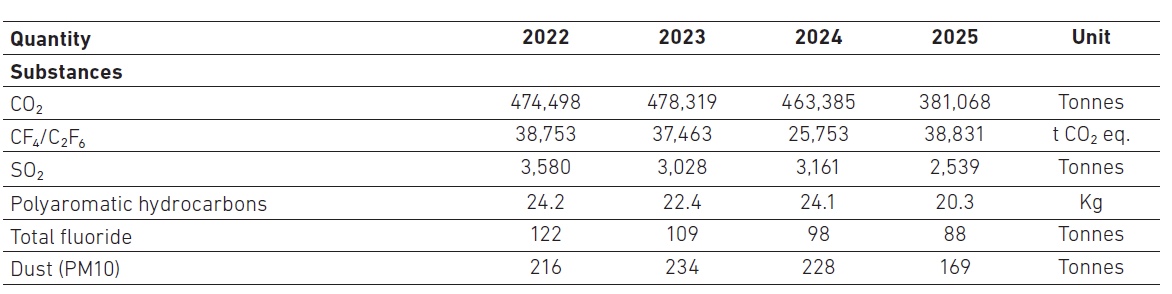
Emissions of fluoride, dust, sulfur dioxide, and greenhouse gases from production processes are classified as substances of very high concern in Norðurál’s operations. Emissions of these substances are provided in the table on the company’s Green Accounting as total emissions and as emissions per production unit. See more in the section on Norðurál’s resource inflows, E5-4 below.
Anticipated financial effects from pollution-related impacts, risks and opportunities E2-6
If an environmental incident occurs that results in environmental pollution, it will involve costs for minimizing the extent and impact and possible mitigation measures. Responses to environmental incidents are defined in Norðurál’s emergency response plan.
Policies related to water and marine resources E3-1
Norðurál’s environmental policy emphasizes that the company’s operations are in harmony with the environment and that continuous efforts are made to minimize environmental impacts. The objective of minimizing emissions includes emissions to water and sea. Regular measurements of wastewater, fresh water and sea are conducted as part of the measurement plan and environmental monitoring. The results are compared with limits set in the operating permit, regulations, and background measurements to assess potential loads.
Description of the processes to identify and assess material water and marine resources-related impacts, risks and opportunities ESRS 2 IRO-1
The investment project process includes an assessment of environmental aspects and efforts to minimize emissions to the sewer are part of that assessment. The operating procedures for regular operations and maintenance projects also consider the analysis of environmental aspects. In this way, procedures are managed to minimize the release of substances into the sewer or into the air that can reach nearby water bodies. Risk assessments are conducted for other projects where preventive measures are defined regarding the use and release of substances and waste management.
Construction projects that may affect water quality are assessed in accordance with the Water Management Act and an impact assessment is conducted for the relevant water body. The operation of flow pits is also based on a risk assessment that considers discharges to the sea.
Actions and resources related to water and marine resources E3-2
On the Norðurál site, there are oil separators and sand traps where applicable that clean surface water which flows to the sea. The total flow of surface water and wastewater to the sea is not measured, but quarterly measurements are made of the concentration of substances in outlets from Norðurál’s site. An analysis of oils in cooling water from rectifiers and the casthouse is conducted twice per year.
Verkís Engineering monitors the sewerage for fluoride, aluminum, suspended particulates, and oil or grease. Chemical analyses of cooling water are conducted by the University of Iceland’s Pharmacology and Toxicology Research Institute.
The investment project process includes an assessment of environmental aspects, and minimizing discharges to the sewer is part of that assessment. The operating procedures for regular operations and maintenance projects also consider the analysis of environmental aspects. In this way, the procedure is managed to minimize the release of substances into the sewer or into the air that can reach nearby groundwater, surface water, or sea. A risk assessment is conducted for other projects, where preventive measures are defined regarding the use and release of substances and waste management.
Construction projects that may affect water quality are assessed in accordance with the Water Management Act and an impact assessment is conducted for the relevant area. The operation of overflow pits is also based on a risk assessment that considers discharges to the sea.
According to a risk assessment conducted with reference to Act No. 33/2004 on the prevention of marine and coastal pollution, only oils in the Norðurál area fall under the definitions listed in Annex II to the Act and result in acute pollution of the sea or coasts. If an emergency pollution risk arises within the Norðurál smelter in Grundartangi that could cause a hazard outside the smelter site, an emergency management team must be summoned. The team is responsible for coordinating Norðurál’s response and that from external response parties. Norðurál has procedures in place for preventive monitoring of oil traps, oil tanks, and hydraulic systems to minimize the risk of oil spills.
Targets related to water and marine resources E3-3
Norðurál monitors water consumption in its systems and has defined warnings on responses if deviations from abnormal use occur. Water consumption is generally stable between years, as can be seen in the company’s green accounting. Norðurál’s objectives are that all measurements of sewage, fresh water and sea water are always within defined reference limits to protect the ecosystem. If deviations occur, they are recorded in a feedback system, a root cause analysis is conducted and preventive measures are implemented to prevent recurrence.
Water consumption E3-4
Water supplied to Norðurál comes from the Tunga and Hlíðarfótur springs in Svínadalur valley. Fresh water consumption in 2025 amounted to approximately 179,505 m3. Thereof, potable water accounted for 71,802 m3 and water used for production was 107,703 m3. The rectifier cooling system uses about 7,884,000 m3 of sea water each year.
- Circulated seawater in the rectifier cooling system is by far the largest part of water consumption
- Industrial water (freshwater) amounts to just over 1%
- Drinking water (freshwater) amounts to barely 1%
Anticipated financial effects from material water and marine resources-related risks and opportunities E3-5
If an environmental incident occurs that results in the pollution of ground water, surface water or sea, it will involve costs for minimizing the extent and impact and possible mitigation measures. Responses to environmental incidents are defined in Norðurál’s emergency response plan.
Transition plan and consideration of biodiversity and ecosystems in strategy and business model E4-1
Norðurál actively participates in coordinated environmental monitoring at Grundartangi to monitor the impact of industrial activities on the area’s biota and ecosystem. The monitoring is conducted according to an environmental monitoring plan approved by the Icelandic Environment and Energy Agency and valid until 2028. The main results show that the impact of industrial activities at Grundartangi on the area’s biota is small and generally within the limits set in the operating permits.
The environmental monitoring is a collaborative project between Norðurál Grundartangi ehf., Elkem Ísland ehf. and Alur Aluminum and is based on a risk assessment with the involvement of stakeholders and experts in the field. Its aim is to assess the actual impact of industrial activities on the natural environment and ensure that operations are in accordance with nature and the local community.
Monitoring includes the following environmental aspects:
- Climate and air quality
- Freshwater
- Vegetation, mosses and lichens
- Hay quality and herbivores (sheep and horses)
- Sea and marine sediments, including marine life at the Grundartangi flow pits
Each monitoring aspect has defined measurement parameters and monitoring frequency. Data recording aims to identify whether the impact of the companies’ operations exceeds the limits of operating permits or regulations and whether long-term effects on nature or the ecosystem can be identified.
A more detailed discussion of environmental monitoring can be found in section E2-1
Policies related to biodiversity and ecosystems E4-2
Continuous efforts are made to minimize environmental impacts and sustainably utilize energy and raw materials. This means that the operations do not have a negative impact on the ecosystem and biodiversity.
Norðurál’s operations have undergone an environmental impact assessment in accordance with the Environmental Impact Assessment Act. The assessment provides a detailed account of assessment factors related to the responsibility to maintain and promote biodiversity, such as vegetation and soil, wetlands, wildlife, land use, water, shoreline, and sea.
Material impacts, risks and opportunities and their interaction with strategy and business model ESRS 2 SBM-3
The main risks related to adverse developments in biodiversity are reputational risk and possible enforcement actions by regulators if such developments are the responsibility of the company.
The main opportunities related to the protection and positive developments in biodiversity relate to the restoration of wetlands. By promoting the restoration of wetlands, Norðurál can have a positive impact on the ecosystem and habitat of many plant and animal species. These actions bind carbon in the soil over time, which Norðurál could use as a mitigation measure against greenhouse gas emissions.
Description of processes to identify and assess material biodiversity and ecosystem-related impacts, risks and opportunities ESRS 2 IRO-1
Norðurál regularly identifies and monitors the impacts of its operations on biodiversity through structured processes in accordance with the company’s environmental management system (ISO 14001) and applicable operating permits. The main process supporting this analysis is the joint environmental monitoring of the industrial site at Grundartangi, which has been conducted continuously for a quarter of a century.
The results of environmental monitoring are reviewed as results come from independent experts who are responsible for the analysis and interpretation of the results. The monitoring results are also reviewed annually in consultation meetings with the Icelandic Environmental and Energy Agency, the Hvalfjörður municipality and the West Iceland Health Inspectorate. In addition, open briefing meetings are held annually in the local community where the results are reviewed, and an opportunity is provided to submit comments. The environmental monitoring plan is reviewed regularly, and changes are made if necessary, in consultation with stakeholders.
Actions and resources related to biodiversity and ecosystems E4-3
Norðurál operates a standardized environmental management system in accordance with ISO 14001, which ensures that the company’s operations are in harmony with nature and the ecosystem in the smelter’s operating area. The system includes integrated management and clear processes that cover both daily operations, regular maintenance, and new construction by the company.
Main focuses of Norðurál’s actions:
- Implementation of protective procedures: Processes in investment projects and maintenance work consider avoiding disruption of sensitive ecosystems and minimizing the impact on the biosphere in the vicinity of the smelter.
- Cultivation and land restoration: Areas disturbed by construction are covered with vegetation to promote the restoration of vegetation cover. Norðurál has also supported forestry in the vicinity of the smelter as part of increasing biodiversity.
- Design and appearance of structures: Emphasis is placed on ensuring that buildings and structures fit well into the environment and landscape. Special attention has been paid to color selection, appearance, and location regarding the visual impact on nature and the coastline of Hvalfjörður.
- Minimization of noise and light pollution: Technical and operational measures have been implemented to keep noise to a minimum. Lighting has also been controlled to have the least impact on the surrounding area and wildlife.
Targets related to biodiversity and ecosystems E4-4
Norðurál’s main objective is that the company’s operations do not have a negative impact on the ecosystem in the vicinity of the smelter and that all operations are within the limits defined in operating permits and applicable environmental legislation. Environmental monitoring of the industrial area at Grundartangi is a key tool in following up on these objectives. It includes regular measurements of the ecosystem and environmental conditions in the area and covers air quality, freshwater, sea, flora, and fauna. Norðurál’s goal is that all reference values are met to ensure the protection of the ecosystem.
The results of environmental monitoring at the Grundartangi industrial site for the year 2025 are compared with:
- Reference values in operating permits and regulations,where they exist.
- Baseline measurements from 1997, which provide a reference for the natural state before the start of operations.
- Long-term comparison between years, which shows the development of environmental factors since all the smelter’s pots were started up in 2007.
Impact metrics related to biodiversity and ecosystems change in Grundartangi E4-5
The main environmental monitoring indicators for the Grundartangi industrial site, as defined in the environmental monitoring plan approved by the Icelandic Environment and Energy Agency, relate to the impact of industrial activities on the ecosystem and the natural environment on land, in water and at sea. They include the following aspects:
Air quality
- Atmosphere: Fluoride in air and dust, sulfur dioxide in air and dust, particulate matter, PAHs in particulate matter, heavy metal, nitrous oxide, and hydrogen sulfide
- Precipitation: Chloride, nitrate, sulfur sulfate, fluoride, pH, sodium, and calcium
Freshwater
- Chemical composition of river water (pH, conductivity, fluoride, chlorine, sulfur sulfate, sodium, and calcium)
Sea and marine sediment
- Quantity of metals, cyanide, fluorine and phosphorus in seawater at flow pits
- Biological aspects of mussels
- PAHs and inorganic trace elements in mussel soft tissue
- PAHs in marine sediments
Vegetation
- Vegetation changes in lichens and mosses, sulfur and fluoride in lichens (which are sensitive and good long-term indicators)
- Vegetation changes in peatlands
- Fluoride (in plant tissue and from the surface) in grass, leaves (birch, spruce) and conifers (spruce, mountain pine, shore pine)
- Fluoride and sulfur in hay
Fauna
- Fluoride in the jaws of slaughtering sheep and the condition of teeth
- Condition of teeth and joints in live sheep
- Condition of teeth and joints in live horses
Meteorological measurements and local distribution models
- Wind speed and direction
- Precipitation and climate conditions
- Data collection to analyze the diffusion of pollutants
Anticipated financial effects E4-6
If an environmental incident occurs that may result in a potential adverse impact on the ecosystem and biodiversity, it will involve costs for minimizing the extent and impact and possible mitigation measures. Responses to environmental incidents are defined in Norðurál’s emergency response plan.
Policies related to resource use and circular economy E5-1
Norðurál places a primary emphasis on minimizing environmental impact and using raw materials and energy in a responsible manner. This involves minimizing waste generation and seeking ways to fully utilize the value inherent in the waste that is generated in the spirit of a circular economy.
The huge advantage of aluminum is that it can be recycled almost infinitely, and 75% of all aluminum ever produced is still in use. Aluminum’s properties therefore fit well with society’s demands for increased value circulation.
Actions and resources related to resource use and circular economy E5-2
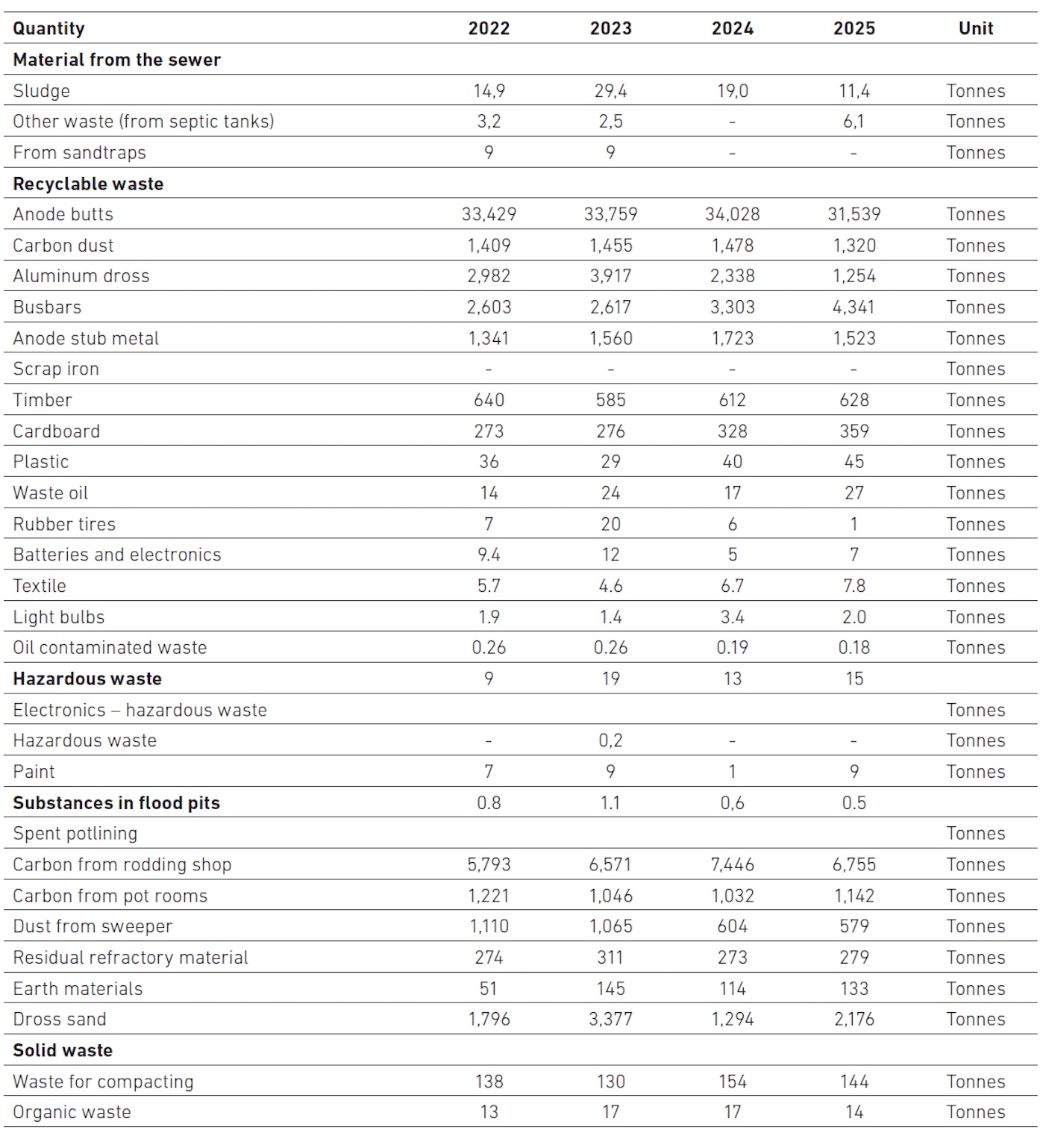
Waste from our operations can be categorized as recyclable materials, non-recyclable industrial waste sent to coastal flow pits, solid waste sent to landfill, sewage, and hazardous waste.
Íslenska gámafélagið (the Icelandic Waste Association) is the waste collection service provider for Norðurál in Grundartangi. Their employee oversees the collection of waste from receiving stations in the production area. Waste is collected in a container area where it is further sorted. Landfilling of mixed waste was discontinued in the spring of 2021. What remains is incombustible coarse waste that is unserviceable for energy recovery. Work will continue to minimize the generation of waste and find other alternatives for the disposal of coarse waste materials.
There are sorting stations in Norðurál’s canteens and operating areas for plastic, paper, general waste, and, where applicable, hazardous waste. Nowhere should there be only one bin for unsorted or general waste, either in offices or in the production area. There shall always at least three bins standing together so sorting can take place.
Staff in each area are responsible for emptying these bins at the reception points shown in the diagram. The reception points receive the categories of waste that is generated in each area. Waste collection staff are responsible for collecting waste from the reception points and transporting it to the company’s waste sorting area. In the waste sorting area, waste is sorted further when appropriate and its volume reduced to minimize transportation.
Norðurál’s action plan specifies actions aimed at minimizing waste generation and maximizing value from waste. The actions are as follows:
- Action 6: Reduction in plastic use
- Action 7: Identification of opportunities for recycling production waste; otherwise sent to flow pits
- Action 8: Coordination of waste labeling
- Action 9: Staff education on waste and environmental issues
Targets related to resource use and circular economy E5-3
In 2025, almost 80% of the waste generated by Norðurál’s operations was recycled. A major part of that is production waste such as anode butts and coke. Emphasis has been placed on recycling and reducing general waste. As an example, organic waste from the canteen, which is treated by SORPA Waste Disposal Company, becomes a nutrient-rich soil supplement and methane gas.
Norðurál’s goals and metrics that contribute to a circular economy are also reflected in the company’s climate action plan. Norðurál’s goal is to reduce landfilling of general waste by 70% between 2015 and 2030. Between 2015 and 2025, landfilling of general waste has decreased by 63%.
Norðurál’s resource inflows E5-4
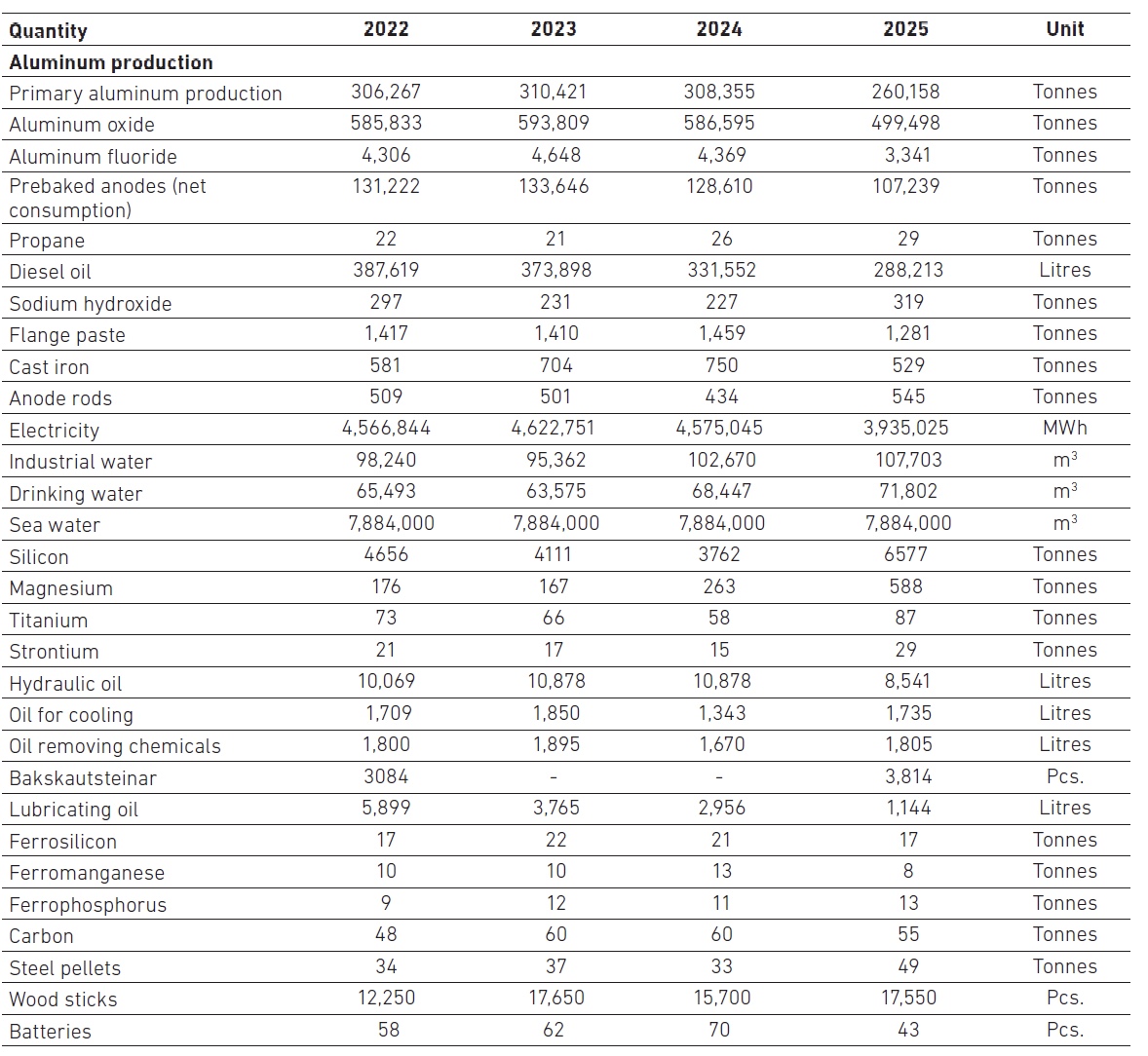
Norðurál manages its resource use in accordance with environmental information regulations and publishes the results annually. This includes a detailed listing of the main inputs and raw materials used in the company’s operations.
The main resources that are classified as resources in Norðurál’s operations include:
- Electricity from renewable energy sources (hydropower and geothermal energy)
- Fresh water and industrial water for production
- Raw materials: alumina, anodes, fluorine, silicon and other materials used in aluminum production
- Auxiliary materials, packaging and other materials used in the processing and transportation of products
Employees, raw materials and resource consumption
Production and raw material consumption
Resource outflows E5-5
Norðurál manages all emissions and waste generated by the company’s operations in accordance with environmental information rules. This data is published annually and provides a comprehensive overview of the release of resources from the company’s operations, both in the form of waste and emissions. Numerical information and a summary can be found under Norðurál’s environmental information.
Main categories include:
- Solids: Inert waste, combustible waste, hazardous materials, anode butts, etc.
- Liquids:Coolants, oils and chemical fluids
- Gases: Emissions of greenhouse gases and other air pollutants according to defined criteria
Emissions and waste management
Waste
Emissions to air
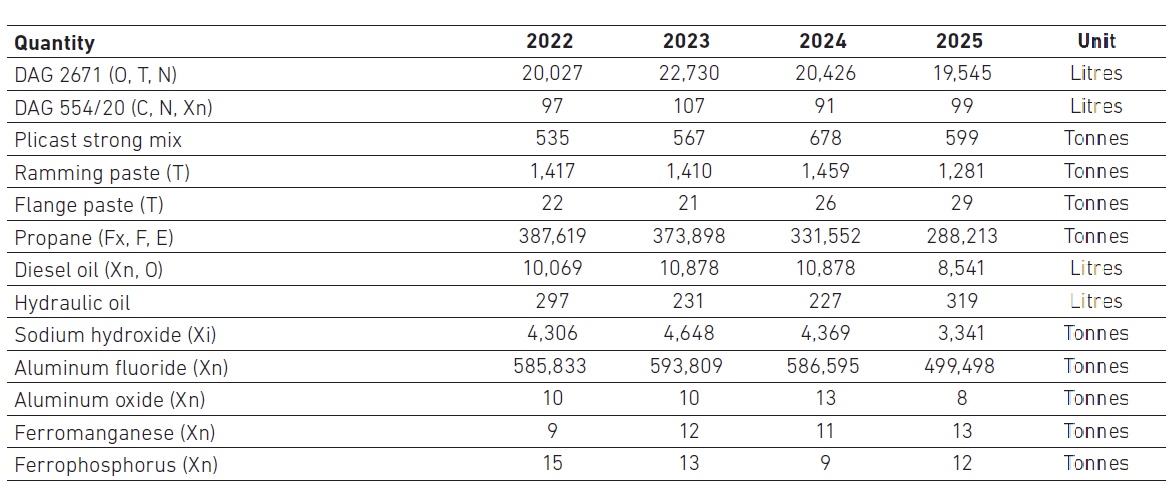
Use of hazardous chemicals (Xn, T, Tx, C, Xi, E, Fx, F, O, N)
Anticipated financial effects from pollution-related impacts, risks and opportunities E5-6
The circular economy can have a positive impact on Norðurál’s operations through improved utilization of raw materials and full utilization of the values inherent in the waste that is generated. The cost of waste disposal can thus be reduced through improved utilization and better waste management.
Description of the processes to identify and assess material resource use and circular economy-related impacts, risks and opportunities ESRS 2 IRO-1
Norðurál regularly identifies and assesses impacts, risks and opportunities related to resource use and the circular economy as part of the company’s environmental and operational management. The assessment is based on the systematic collection and analysis of data on material flows, raw material consumption, waste generation, material reuse, and by-product handling in the production process.
Information on inputs and outflow is recorded and monitored in accordance with the requirements of the operating permit, the regulation on Pollutant Release and Transfer Registers (PRTR) and the company’s internal management systems. The data is used to identify opportunities for increased resource utilization, reduce waste generation and promote increased reuse and recycling of materials within the operations and in the value chain.
When assessing impacts and risks, the entire production life cycle is considered, including raw material procurement, production processes, transportation, waste management and possible reuse or recycling of materials after use. Norðurál relies on, among other things, the results of Life Cycle Assessments (LCA), operational data, environmental measurements, and the results of a double materiality assessment in its assessment.
The main risks associated with a circular economy include limited supply of important raw materials, increased requirements for resource utilization, changes in regulations and costs for waste and by-products management. Opportunities include increased reuse and recycling of materials, improved utilization of raw materials, development of innovative solutions for by-products and increased competitiveness through more efficient use of resources.
Analysis and assessment of these factors is conducted regularly in connection with the company’s risk management, environmental management and sustainability reporting and is revised as new information, changes in operations, or developments in the external environment give rise to this.